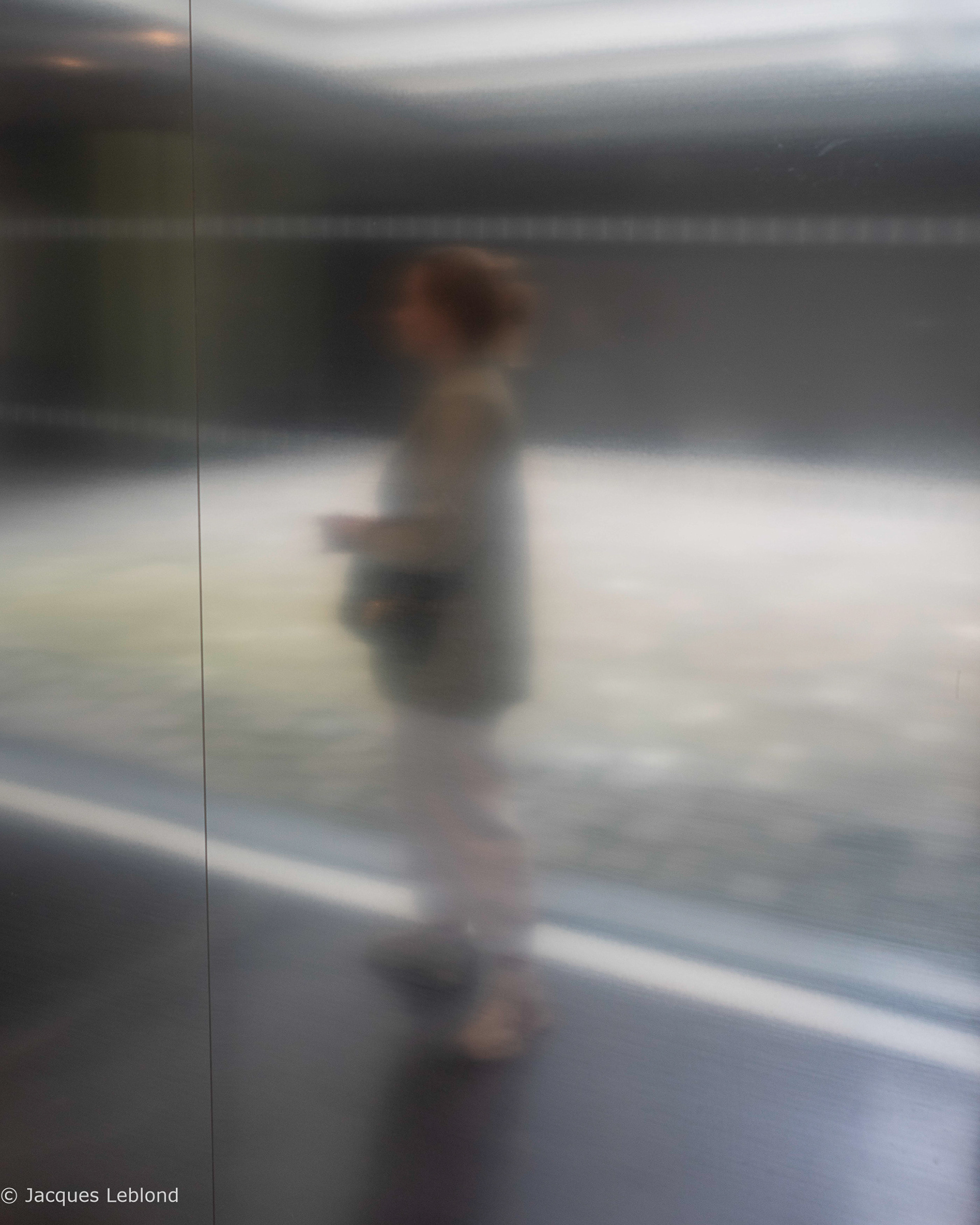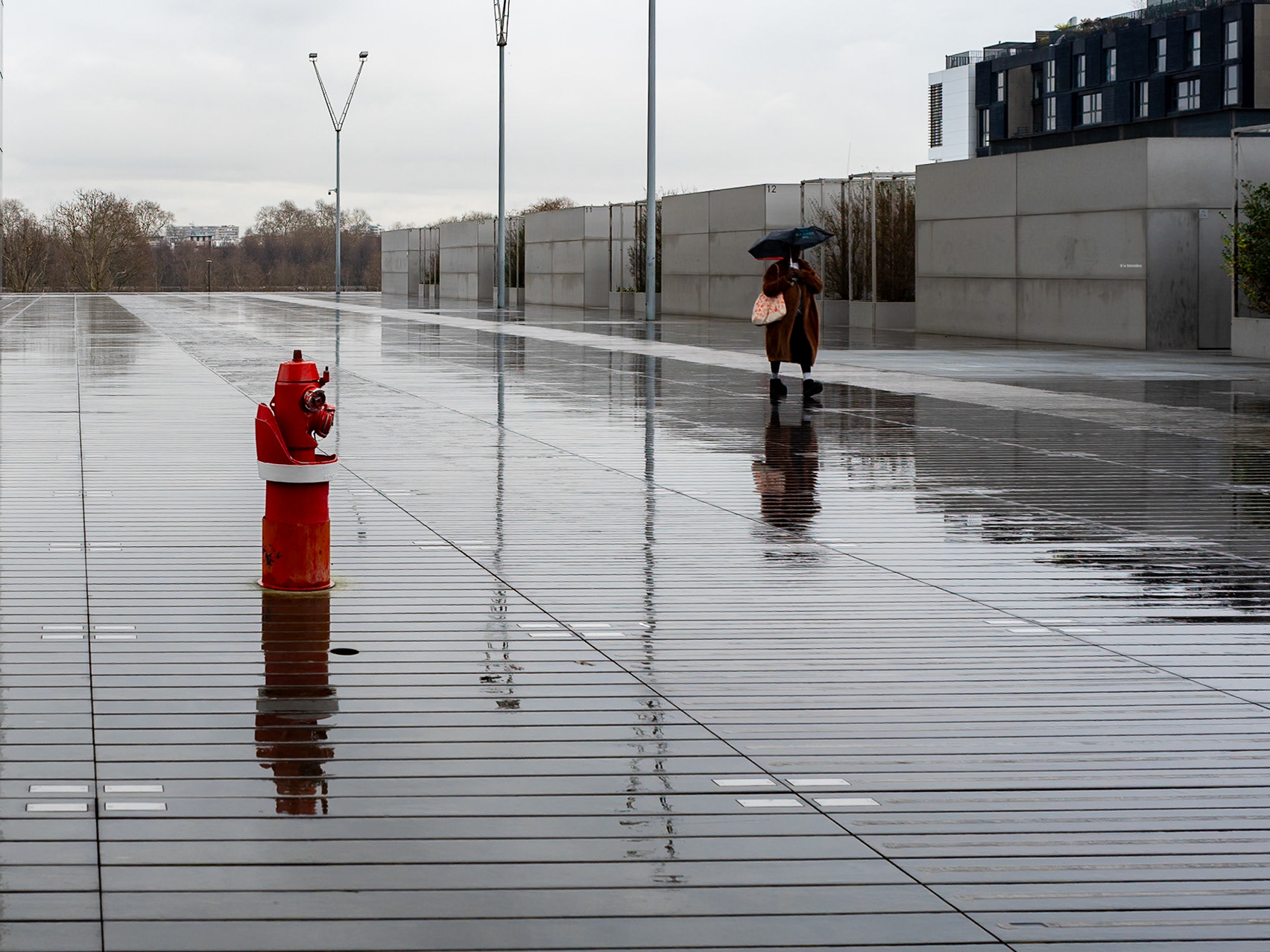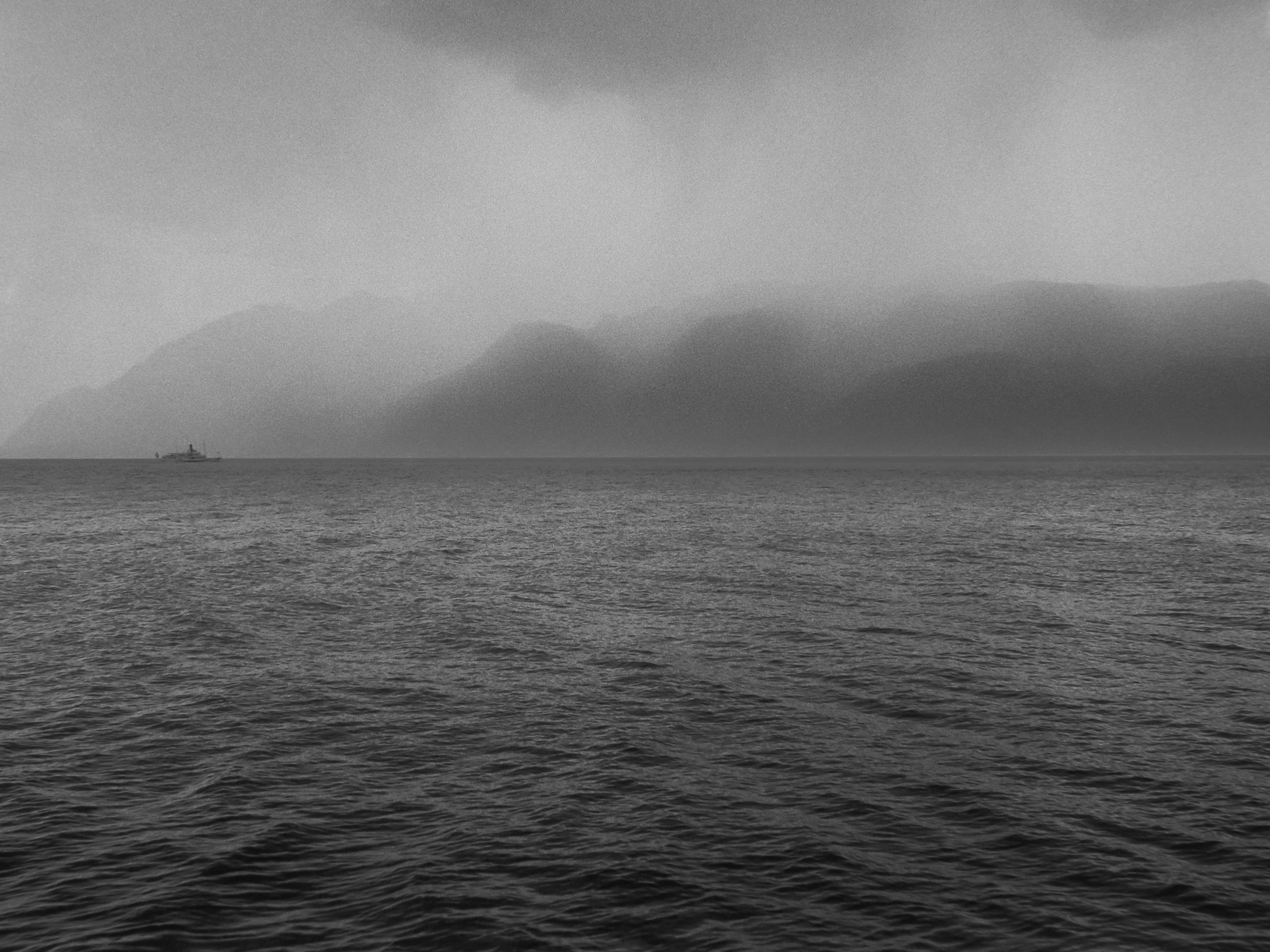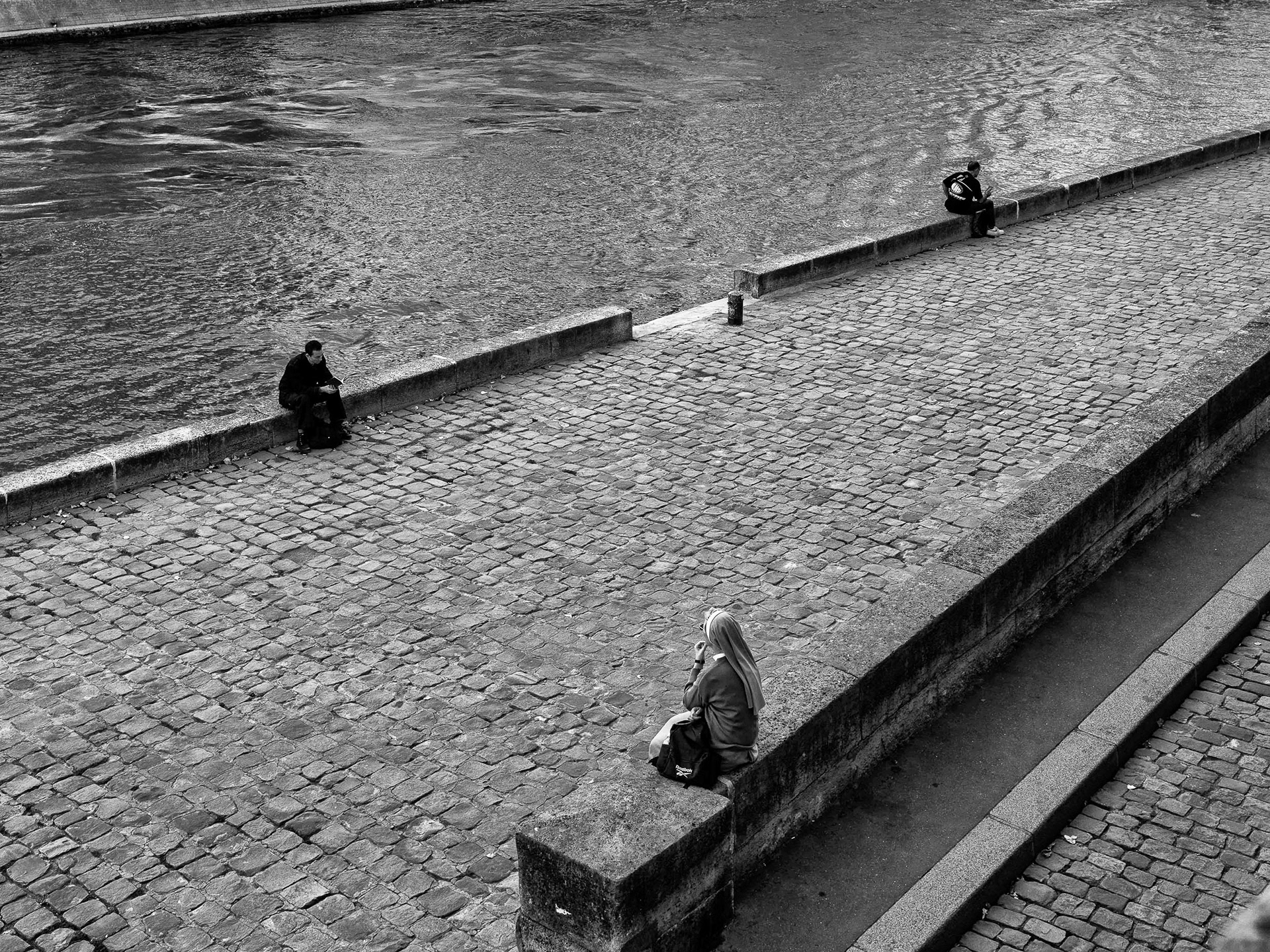
Three photographs puzzle me. All three out of focus.
While I discard my amateur pictures when they are blurred, failed, uninteresting, I keep coming back to Jacques’s photos ever since I discovered them.
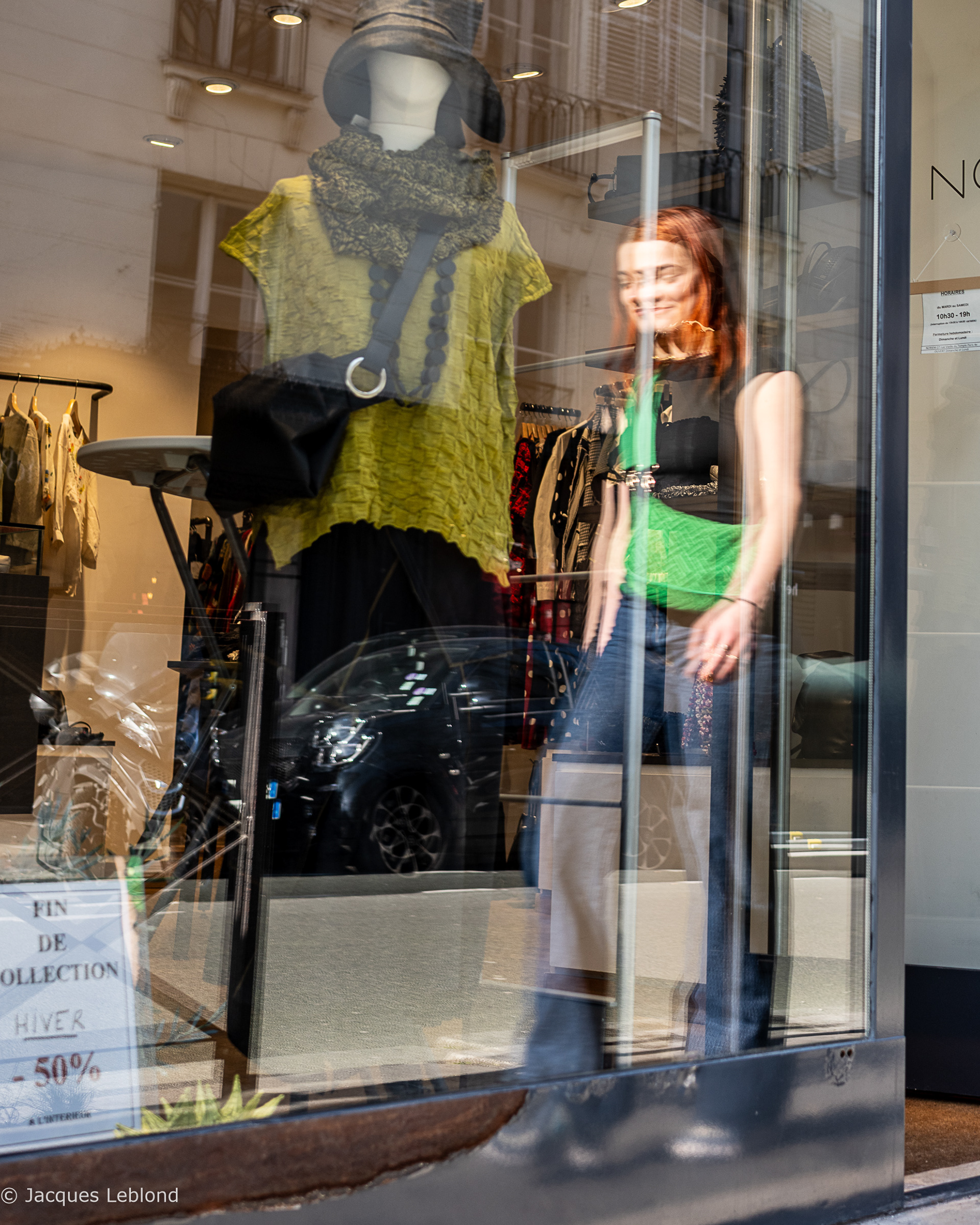
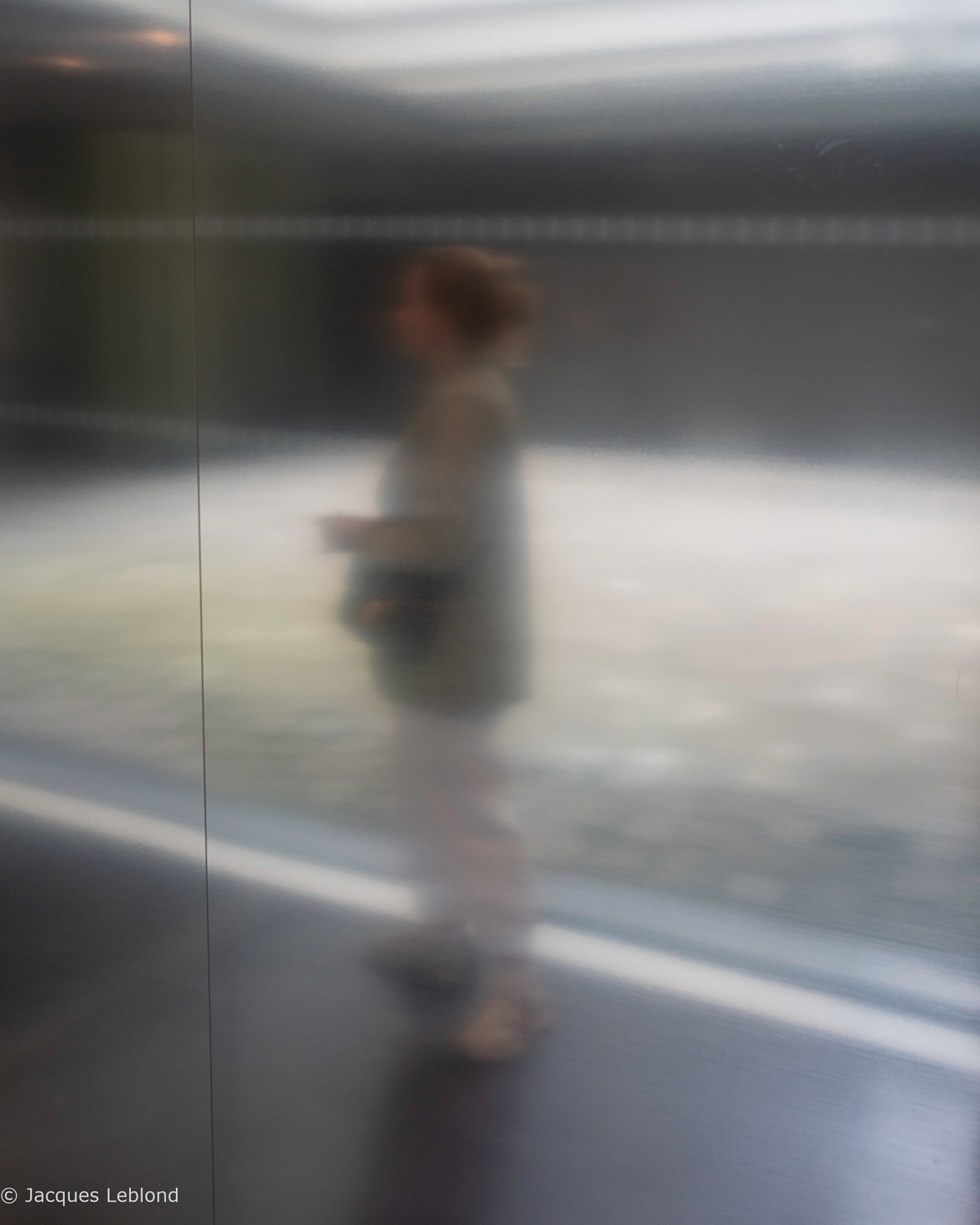
The interposition of a pane of glass, reflections, movements bewilder my perceptions.
Many worlds overlap on a flat surface, superpose into a single image - transfixed.
Had I been walking or cycling across these scenes, in the photographer’s space, I would not have stopped; the elements flashing along the edges of my field of vision – so many solicitations- would have distracted me, causing me to bump into some obstacle.
The eye doesn’t settle on a precise point in the photograph; the gaze is mobile, restlessly scanning the rectangle, now taking in the picture as a whole, now considering its different elements:
the reflections of the street,
the people,
the background,
the succession of lights.

At least two processes are at work as I look at the photographs.
The first unfolds as a series of questions.
Where are those three people going? Why is the one reflected in the clothing shop window smiling? And that man with his head tilted forward, defying gravity, what is he thinking about as the escalator takes him underground to fill his bag? And what about her, the only one who is not walking, what is she waiting for? What is holding her attention?
The second process, simultaneous, has to do with the blur. It draws me back to Gerhard Richter’s blurred paintings. The first time I saw them, I stopped on the threshold of the exhibition room, stunned by such unprecedented beauty. Wondering about their being pictures or paintings, I had come close to the work in which he had smudged the outlines of his uncle, a Wehrmacht officer. I had examined it closely; how the brushstrokes overwhelmed the motif. Too close; I had set off the security alarm. As I stepped back, the painting took on another dimension – conjuring up many different hypotheses: it was impossible for him to portray his shameful uncle directly; he was disavowing him while being unable to free himself from him; he had set out to represent the un-representable.

Here, however, the three photographs are blurred from the outset. A whole world in motion, the elusiveness of life slipping away if we fail to pay attention, to care – such are my thoughts as I consider the photograph of the waiting woman. I realize that Jacques focused off-center, on the dividing line between the two mirrors - which must have been difficult to do since I imagine the sensors being lured to the neighbouring central zones; he had to memorize the focal point as he shifted his camera toward the subject. Thoughtful strategy. Did this vertical line influence my perception before I acknowledged its existence? The woman is behind him; she is looking away; he is not looking at her directly either; mystifying. I stumble upon the enigma of blur.
These cryptic pictures have not done away with puzzling me.